
Fire safety training
Fire safety training teaches people to prevent fires, respond to alarms, evacuate people and act safely with first-response extinguishing equipment. Where possible, we tie training to your building’s systems, evacuation routes and employees’ duties. We offer theoretical training, practical drills and personal coaching for responsible employees.
Our specialists, who hold Level 5 fire safety specialist qualification certificates and extensive operational experience in rescue services, can offer you training enriched with real examples and practical substance.
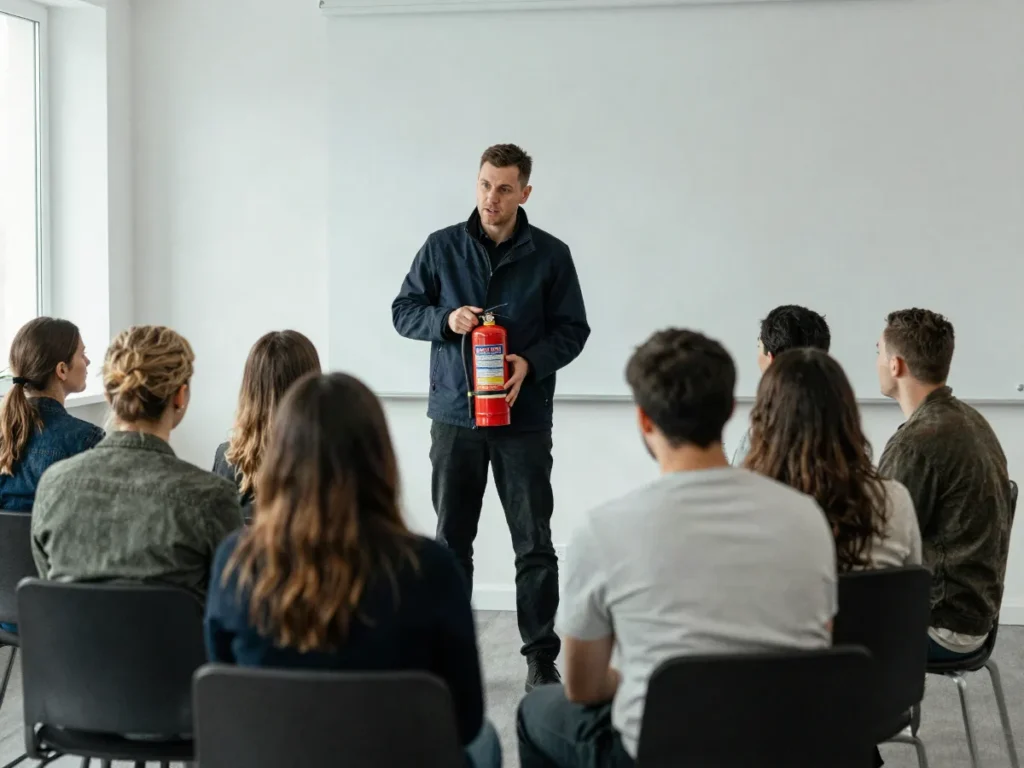
Theoretical part of a fire drill
Theoretical training prepares employees for a fire alarm and evacuation. We go through the situation in your specific building: how the alarm is received, who is notified and where people must go.
The training covers
- Detecting a fire, initial response and notifying 112.
- The building's fire alarm system (ATS), evacuation routes and assembly point.
- Duties of employees and evacuation leaders.
- Hazardous situations and practical questions using the building as an example.
The training we run is always tailored to specific sites. Before the theoretical training begins, our specialist carefully studies the site’s fire safety plan and its particularities in order to adapt the lecture to your needs.
Topics presented in the theoretical part of a fire drill
Fire safety awareness
- The nature of fire and how it develops
- Hazards that accompany a fire and the possible consequences for people, property and the environment
- Possible causes of fires
- Basic and safety rules for extinguishing a fire
Evacuation
- Principles of safe evacuation
- Moving along an evacuation route and following its markings
- Evacuating people
Behaviour and action in the event of a fire
- Rescuing people from a danger zone
- Notifying people of a fire
- Principles of using the fire alarm
- Passing a fire report to the emergency response centre and its content
- Principles of using first-response extinguishing equipment and fire protection installations
Who is it for?
For employees of buildings obliged to hold fire drills; can also be ordered elsewhere.
When and how often?
Generally once a year as part of the mandatory drill.
Result
Training tailored to the building, giving employees clear instructions for acting in the event of a fire.
Practical fire and evacuation drill
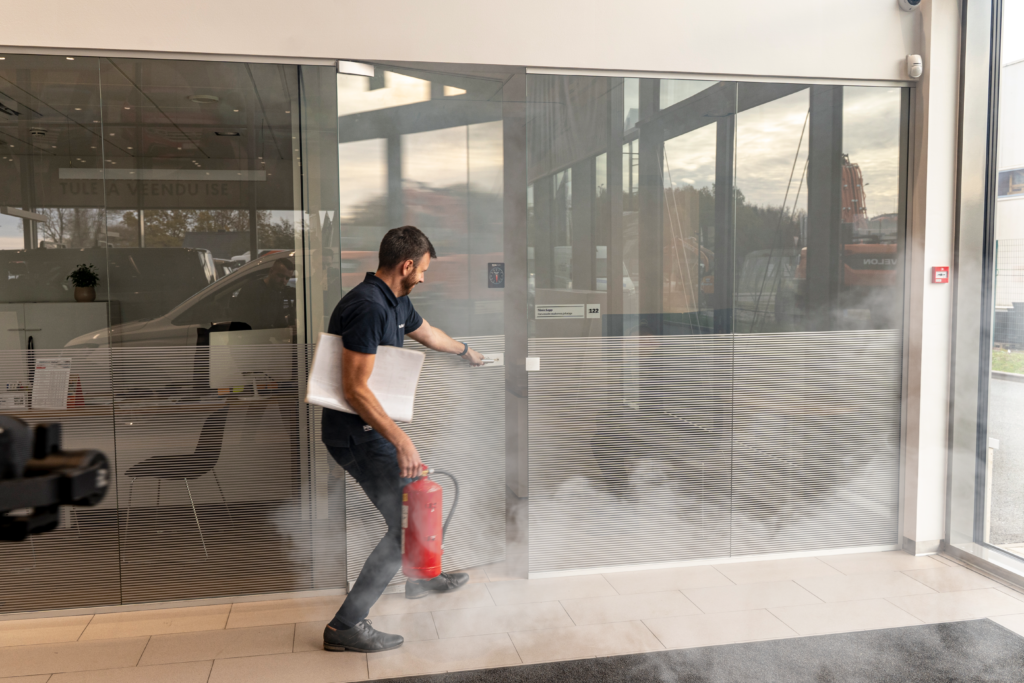
In a practical drill, we play out a possible fire situation in a real building. We see how employees and responsible persons react to the alarm, share information and organise the evacuation.
The training covers
- Preparing a scenario suited to the building and the objectives of the drill.
- Practising the fire alarm, response and evacuation.
- Observing the evacuation leaders, security staff and other roles.
- Assembly, headcount and joint feedback on the actions.
- A written summary of the results and areas for improvement.
A fire drill consists of
- Preparing the legend
- Organising the drill
- Preparing the written summary
- Issuing the certificate
Who is it for?
Buildings with an annual drill obligation and other clients.
When and how often?
Generally once a year in buildings where it is mandatory.
Result
A completed drill, its written summary and documents confirming participation.
Refresher training for evacuation leaders
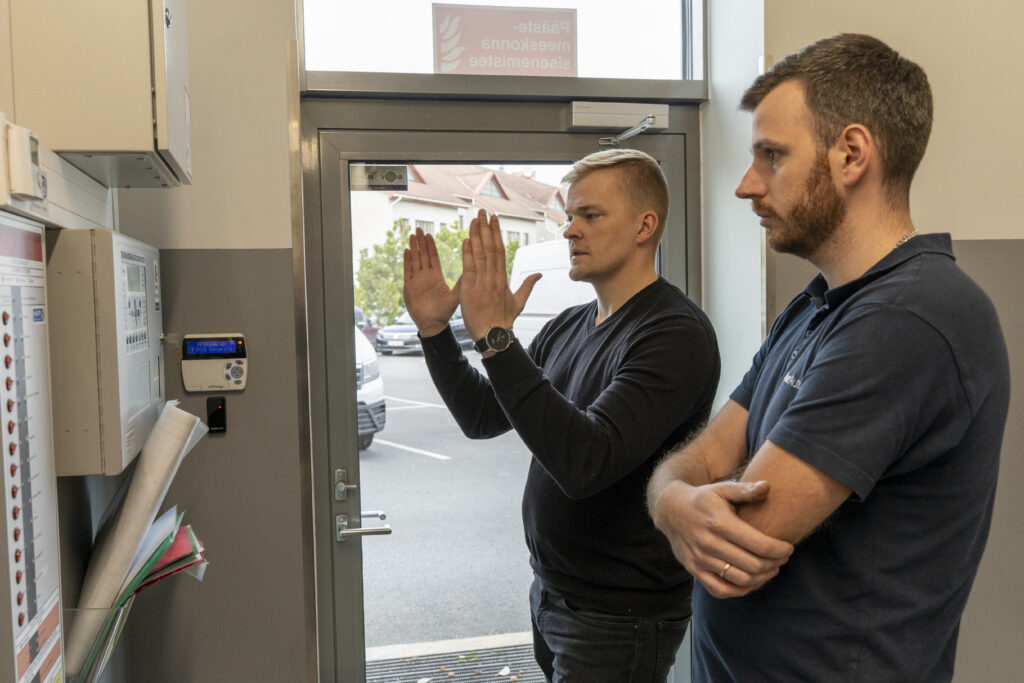
Refresher training is intended for people whose task is to guide others and organise the evacuation in the event of an alarm. We practise decision-making, cooperation and knowledge of the building’s systems in more depth than in standard employee training.
The training covers
- The role of the evacuation leader and decisions in the event of a fire alarm.
- Reading information from the fire alarm control panel (ATS) and locating the alarm.
- Managing the evacuation, assisting people and the headcount.
- Notifying 112 and passing information to the rescuers.
- Building-specific situations and questions.
Who is it for?
For evacuation leaders, administrators, floor wardens and other employees with separate duties in the building in the event of a fire. This is needs-based refresher training, not an annual obligation set separately for all buildings.
When and how often?
According to the client’s needs, for example when staff or work organisation change.
Result
Building-specific practical knowledge of managing an evacuation and acting in an alarm situation.
What are the benefits of refresher training?
When evacuation leaders and those responsible for evacuation have regularly received refresher training, they are more aware and know how to act more confidently in hazardous situations.
Fire extinguisher exercise
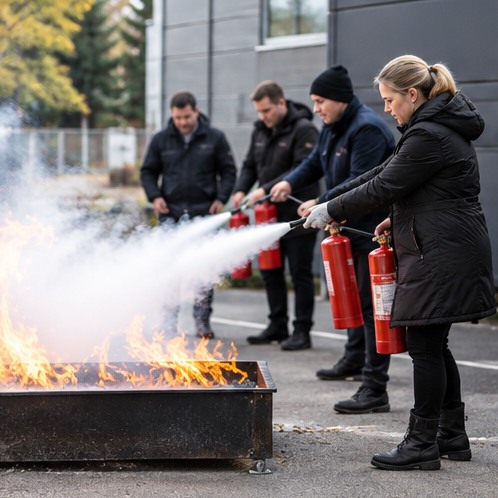
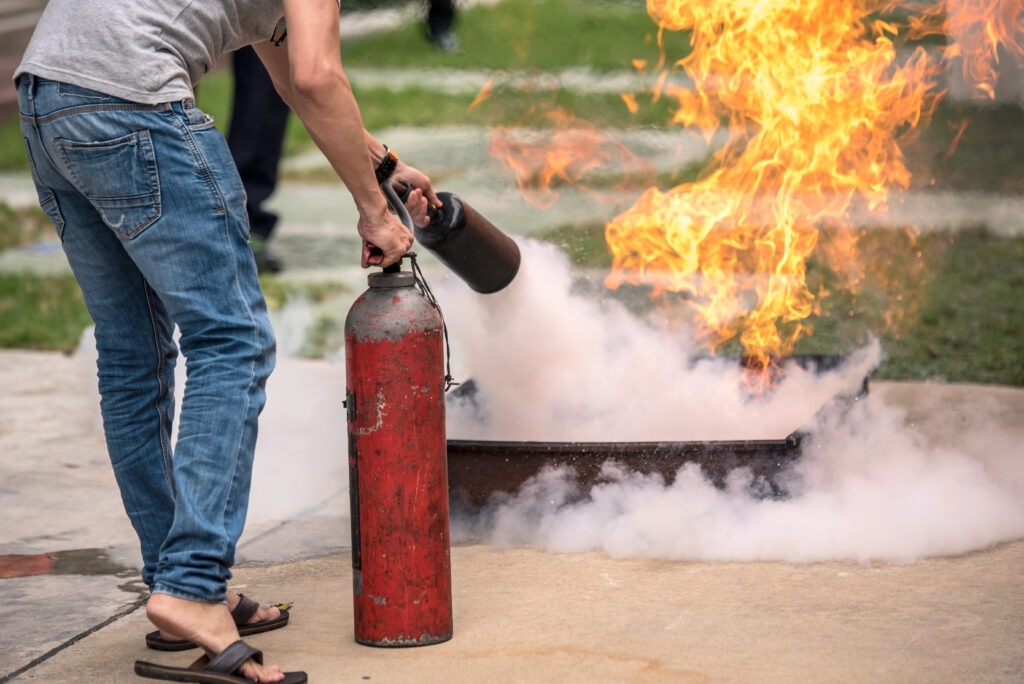
In a fire extinguisher exercise, participants can try using a fire extinguisher in a safe training setting. We teach when extinguishing makes sense and when you must move away from the fire and evacuate.
The training covers
- The main types of fire extinguisher and choosing a suitable one.
- Activating a fire extinguisher and handling it safely.
- Approaching the fire safely and keeping a retreat route open.
- Guided extinguishing on a training rig or in another safe exercise.
Who is it for?
For employees of companies and institutions, especially those who organise the initial response and employees who have not used a fire extinguisher before. The exercise can be ordered separately or together with a fire drill.
When and how often?
As needed or as part of a drill; there is no general interval that applies to all companies.
Result
First practical experience or a refreshed skill in using a fire extinguisher safely.
What are the benefits of an extinguishing exercise?
Experience shows that people who have never used a fire extinguisher themselves are neither willing nor confident enough to do so when needed. It is therefore good if the people working in a company have experience of using a fire extinguisher.
Hot work training
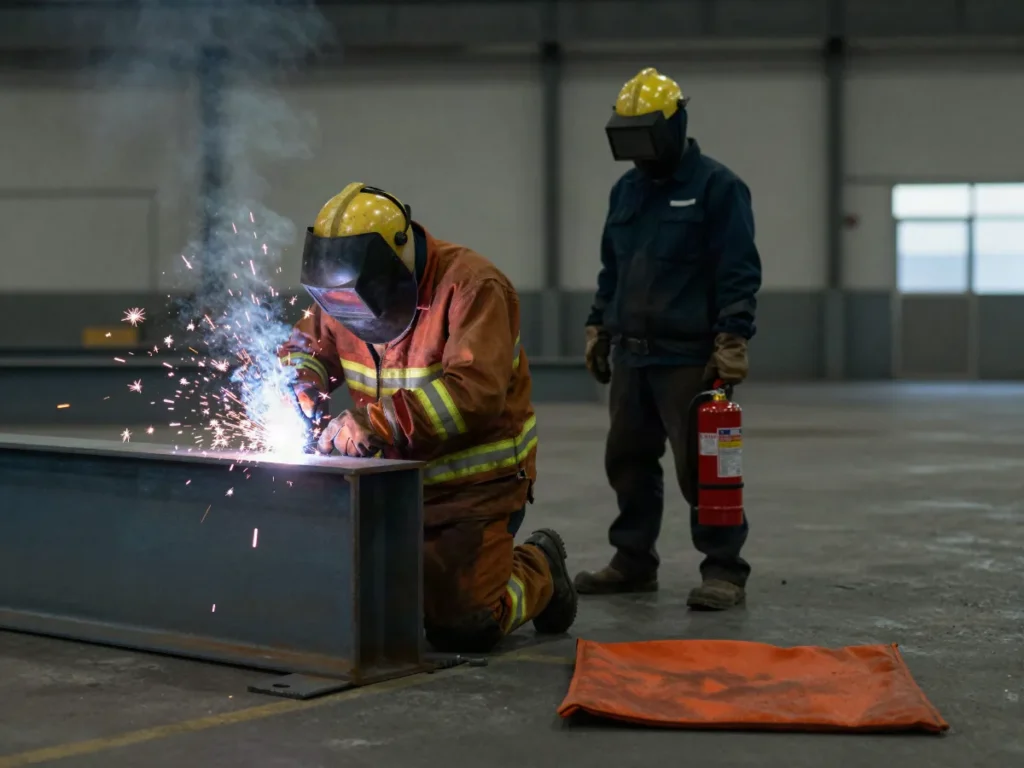
Hot work training prepares people for safe welding, metal cutting, use of open flame and other fire-hazardous work. Participants learn to recognise the hazards at a hot work site, prepare the work area, use first-response extinguishing equipment and act in the event of a fire. The training includes theory, a practical extinguishing exercise and a knowledge check.
The training covers
- Types of hot work, risks and preparing the workplace.
- Protecting combustible materials and fire safety measures.
- Extinguishing equipment and fire safety supervision.
- At least six academic hours of theory.
- A practical extinguishing exercise and a knowledge check.
Who is it for?
For employees who carry out hot work, such as welders, maintenance technicians, builders and car repair workers.
When and how often?
At least six 45-minute theory lessons, plus a practical extinguishing exercise and a knowledge check. The hot work certificate is valid for up to five years.
Result
A person who successfully completes the training and the knowledge check is issued a compliant hot work certificate.
Who can provide the service?
The training is delivered by a person with the required competence named in Regulation No 38.
Personal training for the person responsible for fire safety
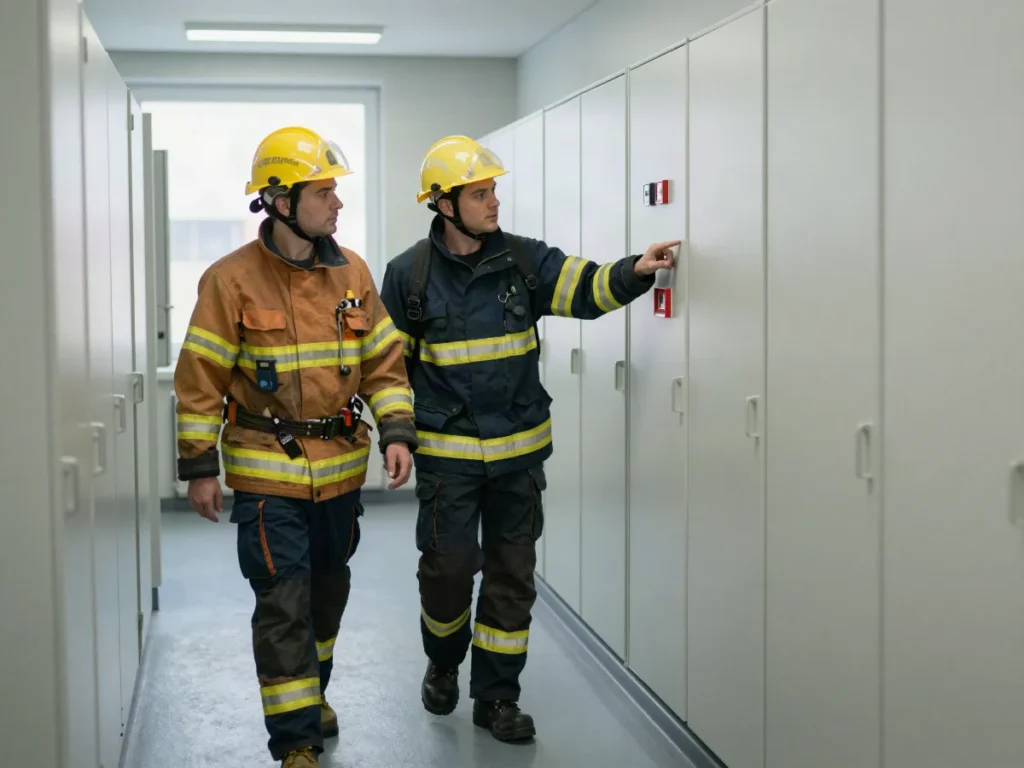
Personal training focuses on one person responsible for organising fire safety and on the actual duties in their building or company. Together we go through the key documents, installations, inspection and maintenance obligations, organising drills and acting in an alarm. The training is practical and driven by questions.
The training covers
- Actions of the responsible person and cooperation with other employees.
- Fire safety documents, maintenance and inspection deadlines.
- Monitoring drills, employee instruction and deficiencies.
- Example cases and solving the client's specific concerns.
Who is it for?
For the building manager, the employee responsible for fire safety, the company manager or a new responsible person.
When and how often?
The duration and topics are agreed according to the building and the responsible person’s duties. This is not a universal training obligation set separately by law.
Result
Knowledge tailored to the building’s duties and a practical overview of actions for the responsible employee.
Let us take the fire and occupational safety burden off your shoulders
So you can focus 100% on your day-to-day work