
Chemical safety
Handling hazardous chemicals involves assessing accident risks, describing preventive measures and planning how to act in an emergency. We prepare documentation under the Chemicals Act, including risk analyses, information sheets and company emergency response plans. We also help arrange the submission of documents in the TTJA information system JVIS.

Company emergency response plan (HOLP)
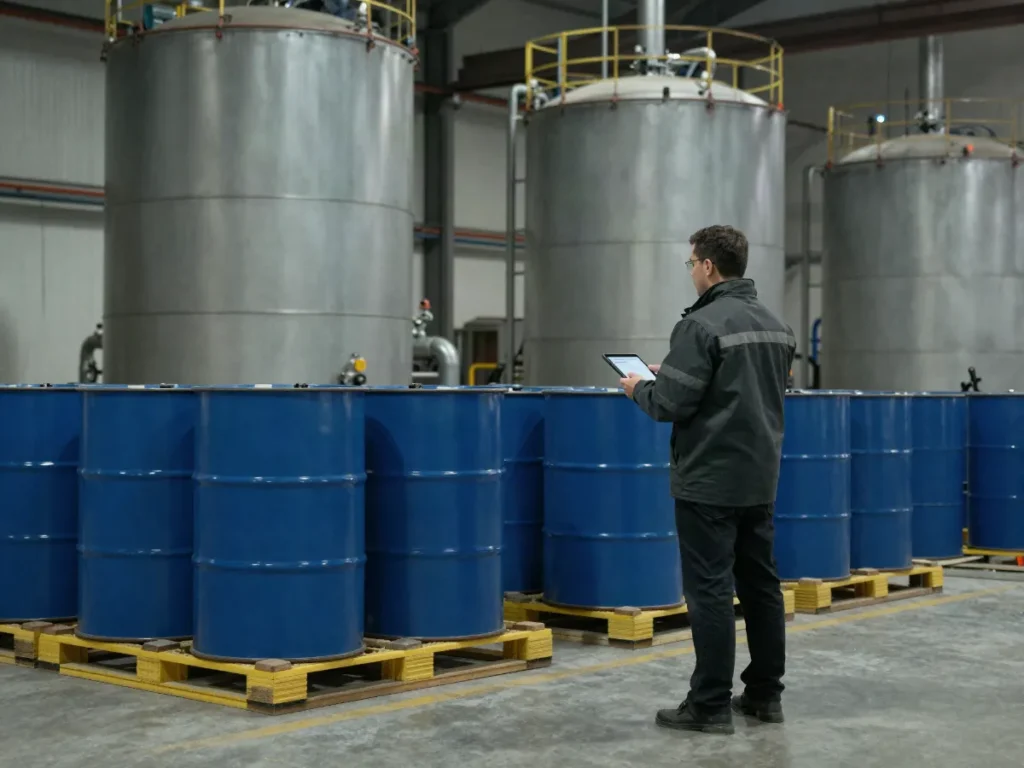
A company emergency response plan (HOLP) describes how to act in the event of an accident involving a hazardous chemical. The plan is based on the company’s risks, work organisation and possible consequences.
What do we do?
- Gathering background information on the basis of the risk analysis and possible accident scenarios.
- Describing the arrangements for alarm, command and notification.
- Actions for protecting people, containing the accident and cooperation.
- Preparing the required contacts, diagrams and annexes.
Who is it for?
Hazardous companies and those with a major accident hazard, according to their hazard category.
When and how often?
The plan must be kept up to date and reviewed at least every three years. A company with a major accident hazard must hold an exercise to test the plan at least every three years.
Result
A HOLP that takes the company’s operating arrangements into account, with the necessary annexes.
Legal basis: Chemicals Act · TTJA: mandatory chemical safety documentation
Risk analysis under the Chemicals Act
A risk analysis under the Chemicals Act helps assess the causes, extent and consequences of possible accidents at the establishment. It differs from an ordinary workplace risk assessment and is prepared on the basis of the chemicals and the hazard category of the establishment.
What do we do?
- Baseline data on the chemicals, quantities and activities of the establishment.
- Assessing possible accident scenarios and hazard zones.
- Describing preventive and mitigation measures.
- Preparing the risk analysis and the required summary.

Who is it for?
Primarily category C and B companies; for category A, the risk analysis forms part of the safety report.
When and how often?
The risk analysis must be kept up to date and reviewed at least every five years, and whenever significant changes or new risks arise.
Result
A risk analysis document under the Chemicals Act, to the agreed scope.
Legal basis: Chemicals Act · TTJA: mandatory chemical safety documentation
Information sheet for hazardous chemical handlers
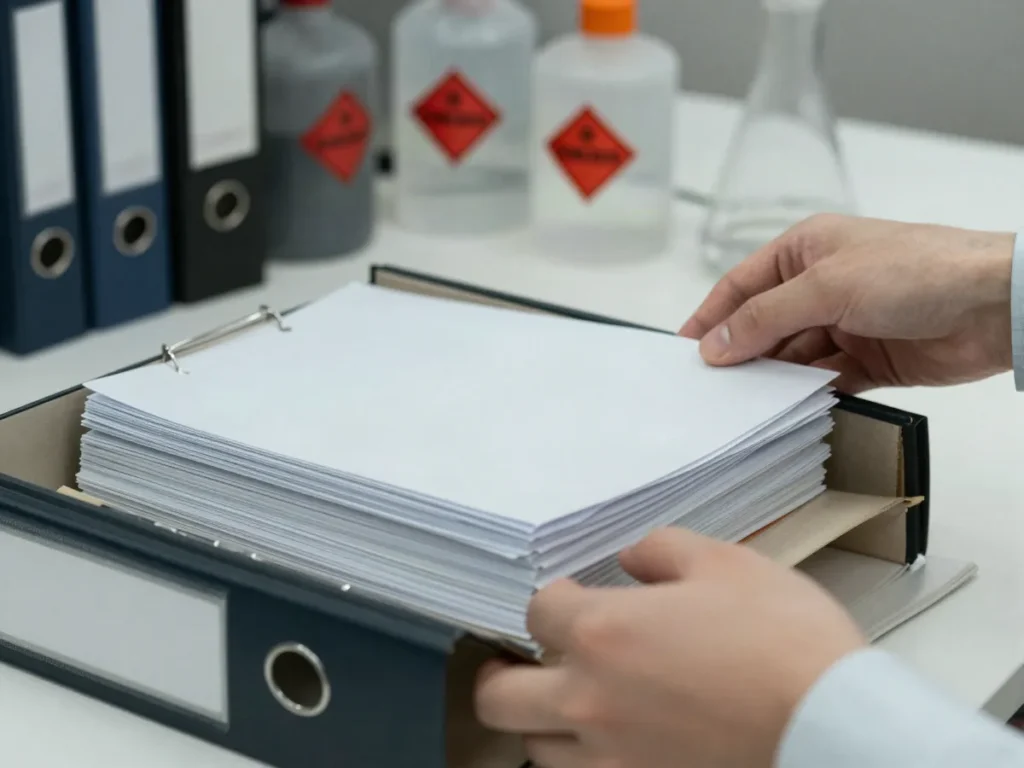
The information sheet gives the competent authorities an overview of the hazardous chemicals handled at the company, their quantities and the key data of the establishment. We prepare it in the required form on the basis of the baseline information provided by the client.
What do we do?
- Collecting data on the company, the establishment and the chemicals handled.
- Clarifying the quantities and locations of the chemicals.
- Gathering the necessary drawings, site plan and annexes.
- Preparing the information sheet and updating it where necessary.
Who is it for?
Companies whose hazard category gives rise to an obligation to prepare an information sheet.
When and how often?
The information sheet must match the company’s actual data; it is updated when the data change and at least during the periodic review provided for by law.
Result
An information sheet prepared for submission, with the required annexes.
Legal basis: Chemicals Act · TTJA: mandatory chemical safety documentation
Submitting documents in JVIS
Documents under the Chemicals Act are submitted and processed through the TTJA supervision information system JVIS. We help prepare the required information, enter the data and upload the necessary documents on the basis of a power of attorney. We follow the progress of the submission and help respond to requests for clarification where needed.
What do we do?
- Checking that the documents and annexes to be submitted are complete.
- Uploading documents or entering data in the system.
- Compiling technical deficiencies and points requiring supplementation.
- Arranging the submission on the basis of the client's authorisation and confirmation.

Who is it for?
For operators of hazardous establishments and those with a major accident hazard who must submit chemical safety documents to the TTJA.
When and how often?
As needed for submitting and amending documents.
Result
Documents correctly submitted in the information system and an overview of the submission status.
See also
Let us take the fire and occupational safety burden off your shoulders
So you can focus 100% on your day-to-day work