
Installations and maintenance
Fire protection installations must remain in working order throughout the building’s life. We organise the inspection, maintenance and, where needed, repair of fire extinguishers, hose systems, fire doors, automatic fire alarm systems, ventilation and emergency lighting. Regulated work is carried out by qualified specialists and partners.
A fire protection installation is a building system or technical device intended to prevent, detect or extinguish a fire, limit the spread of fire and smoke, or enable evacuation or rescue work to be carried out safely.
Fire extinguishers
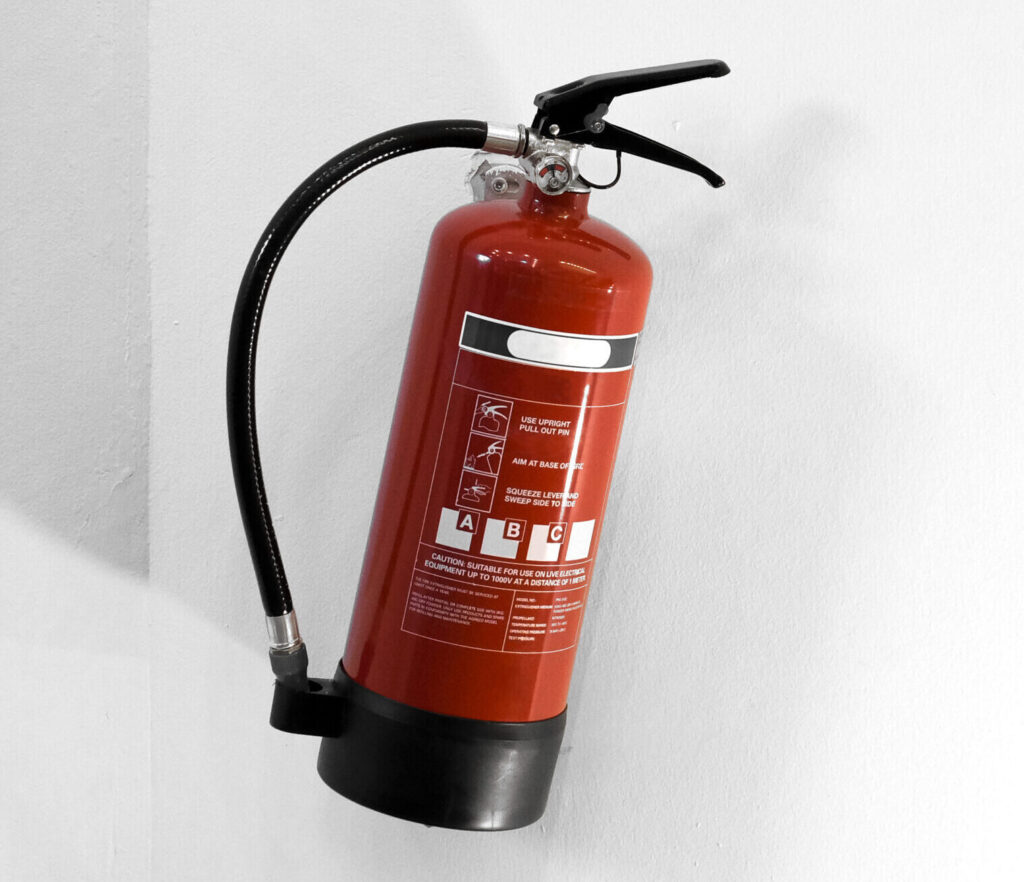
Fire extinguisher inspection assesses their technical condition, readiness for use and markings. Maintenance covers the operations required by the manufacturer’s instructions and current requirements, and the replacement of worn parts. We help arrange both regular inspection and maintenance after use or when a fault is found.
What do we do?
- Review of the number, location and intended use of extinguishers.
- Checking inspection deadlines and labels.
- Arranging regular inspection or maintenance.
- Proposals for replacing deficient or unsuitable extinguishers.
Inspection
A fire extinguisher is inspected at the frequency specified by the manufacturer or when the results of an examination require it.
- Once a year, if the extinguisher is kept in a place exposed to humidity, vibration or temperature fluctuations
- Once every two years, if the extinguisher is kept in a dry place with a constant temperature
Maintenance
- A fire extinguisher is put into working order after each use and maintained as needed, but no less often than specified by the manufacturer
- If the manufacturer has not specified the maintenance frequency, water and foam extinguishers are maintained every five years and other extinguishers every ten years
Need a new fire extinguisher?
Powder, foam and CO₂ extinguishers and vehicle extinguishers – order directly from the e-shop.
Who is it for?
Owners and managers of buildings and sites.
When and how often?
Inspection at the frequency set by the manufacturer. If the manufacturer has not set a frequency, the extinguisher is generally inspected once a year in harsh conditions of use or once every two years in a dry room with a constant temperature.
Result
Inspected and properly documented fire extinguishers and, where necessary, a new solution.
Who can inspect and maintain?
Maintenance must be carried out by a legal entity with the relevant entry in the Register of Economic Activities. Inspection and maintenance require professional training and at least three years of work experience in the field.
Fire hose systems
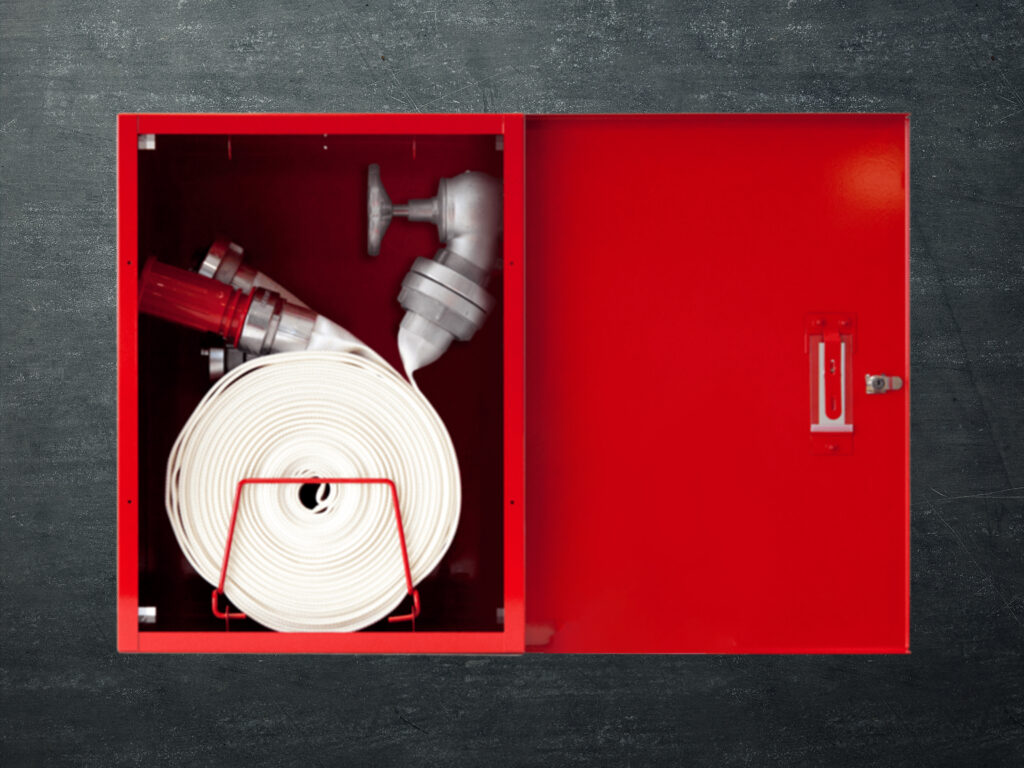
A fire hose system must be ready for use and accessible. We inspect it, or arrange an inspection with the relevant service provider, to detect wear, faults and maintenance needs.
What do we do?
- Accessibility and marking of hose cabinets.
- Condition of the hose, nozzle, valve and other parts.
- Arranging the required tests and maintenance operations.
- Recording deficiencies and planning repairs.
Inspection
- Hose cabinet inspection
- System effectiveness check
Maintenance
- Hose pressure test at a service point
Who is it for?
Buildings where a hose system exists or is required.
When and how often?
In accordance with legislation, the standard and the system instructions; the exact interval is verified on site.
Result
An inspection or maintenance document and an overview of the condition of the system.
Fire doors
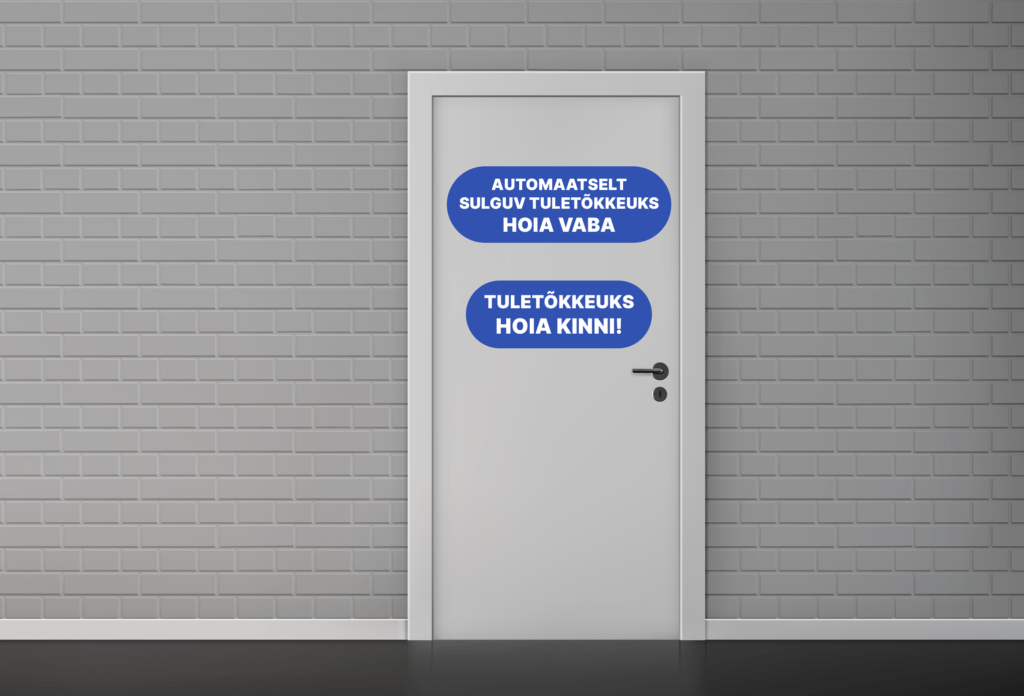
A fire door helps limit the spread of fire and smoke, but only if the door closes and is in working order. We help identify deficiencies and arrange repairs according to the type of door.
We ensure regular maintenance of fire doors and evacuation exits in compliance with all established standards. Fire doors are inspected at least once a year and evacuation exits every quarter, in accordance with current requirements.
What do we do?
- Checking that the door closes and that the closer and latch work.
- Inspecting seals, fastenings and visible damage.
- Recording problems with fire doors that are open or obstructed.
- Arranging repairs and the work of the relevant specialist.
Who is it for?
Owners and managers of buildings with fire doors.
When and how often?
In accordance with the manufacturer’s instructions, the use of the building and the maintenance obligation.
Result
A list of deficiencies and doors repaired or maintained by agreement.
Inspection frequency
If a fire door is on an evacuation route, the inspection frequency is quarterly; otherwise it is once a year. Standard: EVS 871:2017.
Automatic fire alarm system (ATS)
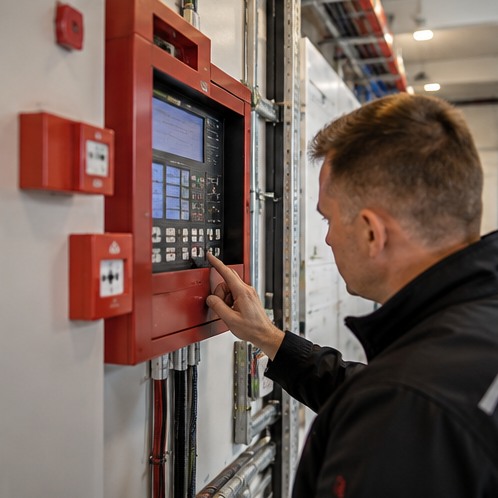
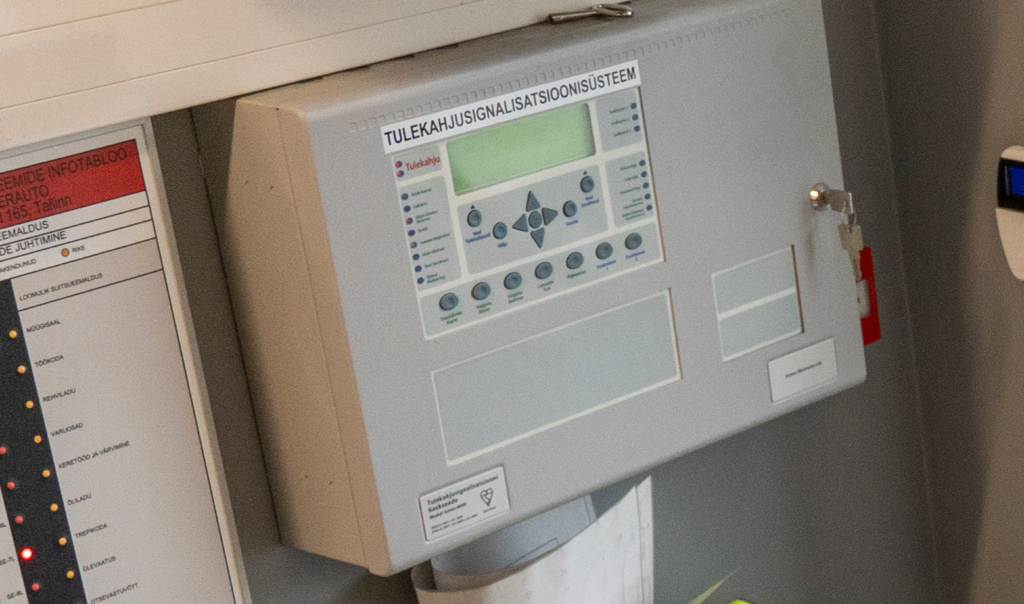
An automatic fire alarm system (ATS) detects signs of fire and raises the alarm. To keep the system reliable, the equipment, alarm functions and maintenance records must be checked. We arrange regular ATS maintenance and fault rectification through suitably qualified partners.
What do we do?
- Arranging ATS maintenance in accordance with the applicable requirements.
- Arranging checks of the control panel, detectors and manual call point.
- Reviewing maintenance reports and system documentation.
- Arranging the repair of identified faults and a follow-up check.
Our team guarantees the regular operation of fire safety systems. We respond 24/7 and document our work. Efficient and convenient aftercare.
Once a quarter you must
- Check all entries made in the logbook and act on them
- Check the capacity of the backup power batteries
- Check the control panel's alarm, fault and auxiliary functions
- Visually inspect the automatic fire alarm system equipment and look for signs of moisture entering the control panel
- Carry out all circuit checks and tests specified by the installer, supplier or manufacturer
- Assess the overall functioning of the system and inform the occupier of any system disruptions caused by the arrangement of inventory or the way the building is used
Once a year you must
After the annual maintenance, the maintenance provider draws up a report, which is given to the person responsible for the automatic fire alarm system.
- Check the operation of every detector, manual call point and alarm device in accordance with the manufacturer's recommendations
- Visually check that all cable connections and equipment are in order, undamaged and properly protected
- Check the condition of the batteries
Who is it for?
The owner or occupier of a building with an ATS.
When and how often?
Under the regulation in force, regular ATS maintenance is carried out once a quarter, with a more thorough inspection once a year; the manufacturer’s instructions are also followed.
Result
Documented inspection and maintenance work and an overview of the condition of the system.
Who can provide the service?
Regulated ATS work is carried out by companies with the required competence and registration.
Ventilation maintenance
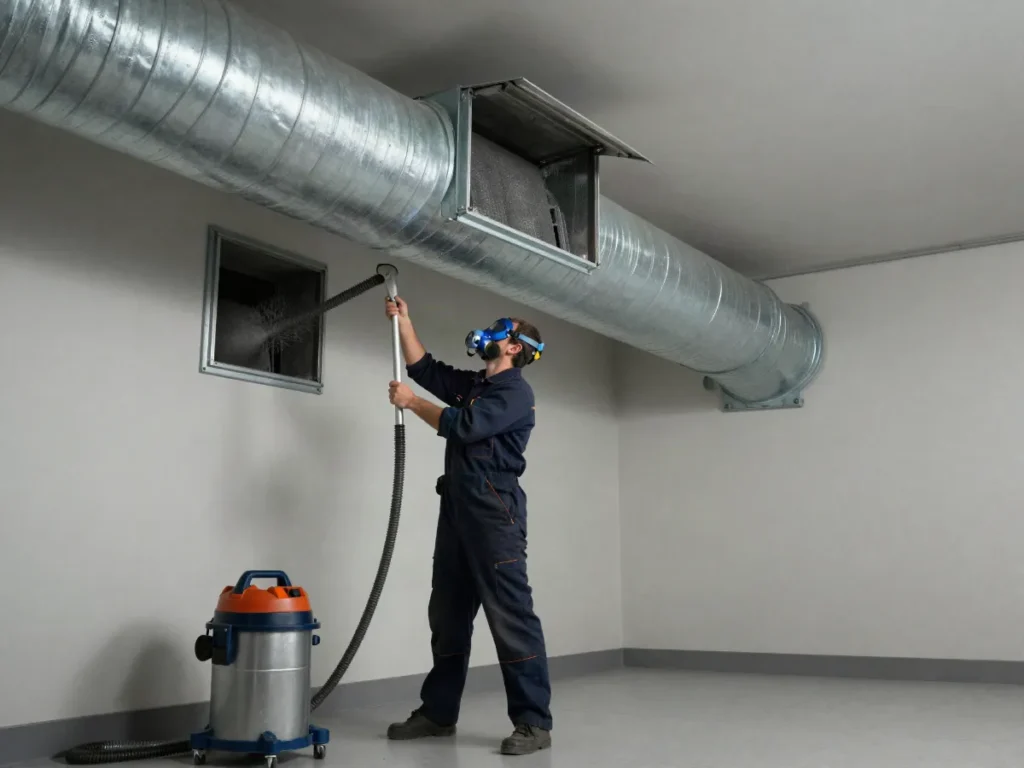
We clean and maintain ventilation systems and inspect fire dampers. Regular maintenance helps reduce the risk of fire and smoke spreading.
What do we do?
- Cleaning and maintenance of ventilation ducts.
- Inspection of the condition and operation of fire dampers.
- Recording deficiencies and drawing up a maintenance report.
Who is it for?
Building owners, property managers and companies.
When and how often?
Ventilation ducts are cleaned at least once a year, more often if needed. Fire dampers are inspected once a year or more often if the manufacturer’s instructions require it.
Result
A maintained system and a documented inspection.
Legal basis: Regulation No. 17, § 27 · EVS 812-2:2014 · Rescue Board guide
Emergency lighting
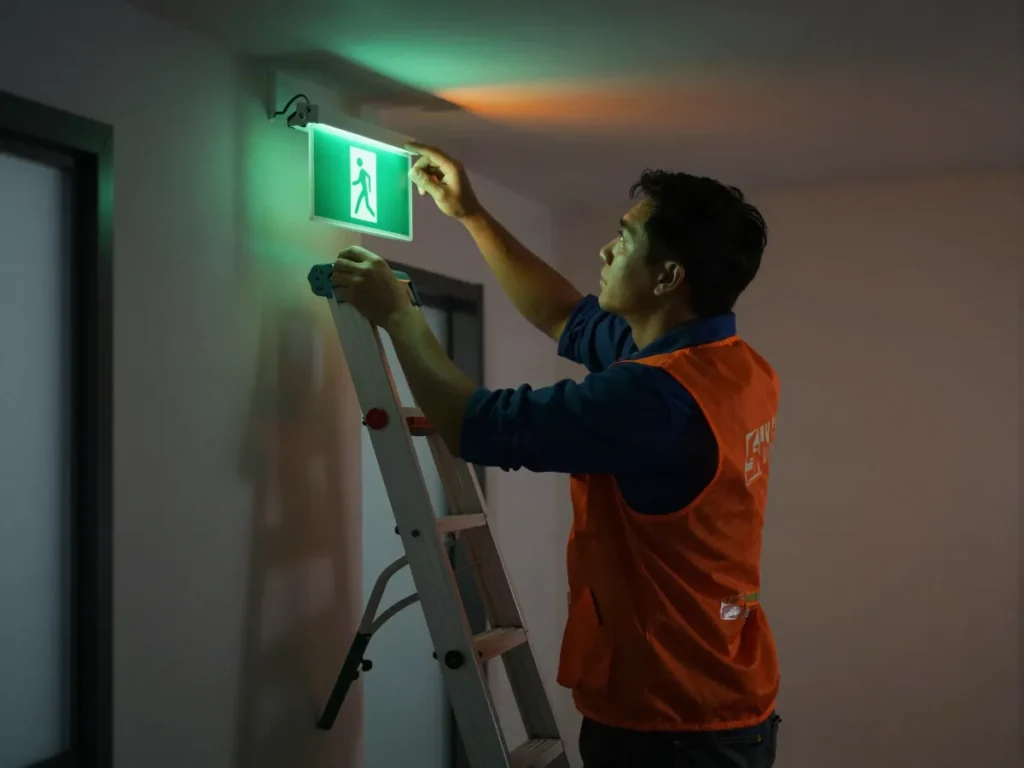
We install, inspect and maintain emergency lighting. The service covers escape route lighting, illuminated exit signs and other required emergency lighting.
What do we do?
- Installing and replacing luminaires.
- Functional checks.
- Testing batteries and backup power.
- Documenting maintenance work.
Who is it for?
Building owners, property managers and companies.
When and how often?
Regular function tests and an annual duration test, based on the applicable standard and the system’s instructions.
Result
Working emergency lighting and a documented inspection.
Legal basis: Regulation No. 17 · EVS-EN 50172:2024
Let us take the fire and occupational safety burden off your shoulders
So you can focus 100% on your day-to-day work